How to Manage Pool Chemical Imbalance: The 2026 Definitive
The maintenance of a residential or commercial swimming pool is often perceived through the lens of leisure, yet the underlying reality is one of rigorous aqueous chemistry. A pool is not merely a body of water; it is an open-loop chemical reactor constantly influenced by environmental loads, bather waste, and source water variability. How to Manage Pool Chemical Imbalance. When the delicate equilibrium of sanitizers, buffers, and minerals collapses, the result is more than an aesthetic nuisance. It is a systemic failure that can lead to the rapid deterioration of expensive mechanical infrastructure and the emergence of pathogenic risks.
Navigating the complexities of water balance requires a departure from the “test strip and hope” mentality that characterizes much of the amateur pool care market. To maintain a sterile yet non-corrosive environment, one must account for the interlocking relationship between hydrogen ion concentration (pH), total alkalinity, and calcium hardness. These variables do not exist in isolation; a shift in one inevitably triggers a compensatory or catastrophic shift in the others. The objective of professional-grade management is to achieve “Saturation Index” stability, ensuring the water is neither scale-forming nor aggressive toward the pool’s surface.
As we move into 2026, the tools available for monitoring these parameters have achieved a level of sophistication previously reserved for municipal water treatment plants. Digital titration, colorimetric analysis, and real-time potentiometric sensors have redefined the standard for accuracy. This article serves as a definitive pillar for those seeking to move beyond superficial fixes and into a deeper mastery of aqueous governance. By examining the structural and chemical forces at play, we provide a roadmap for sustaining a safe, crystal-clear, and architecturally sound aquatic environment.
Understanding “how to manage pool chemical imbalance”
To effectively address how to manage pool chemical imbalance, one must first recognize that “imbalance” is a multifaceted state. It is not defined simply by the presence of algae or the smell of chlorine—symptoms that are often misunderstood. For instance, the pungent “pool smell” that many associate with too much chlorine is actually the result of chloramines (combined chlorine), which indicate that there is insufficient free available chlorine to fully oxidize organic contaminants. Managing the chemistry is, therefore, a task of identifying the root cause rather than treating the visual or olfactory symptom.
A significant oversimplification in the industry is the reliance on pH as the sole metric of water health. While pH determines the “efficacy” of your sanitizer, it is the Total Alkalinity that acts as the “anchor” or buffer for that pH. Without sufficient alkalinity, the water becomes susceptible to “pH bounce,” where minor additions of chemicals or even heavy rainfall cause wild, uncontrollable swings in acidity. A multi-perspective approach requires evaluating the water’s “Langelier Saturation Index” (LSI), a mathematical model that determines whether the water will dissolve the pool’s plaster or deposit calcium on the pipes.
Finally, the risk of mismanagement is compounded by the “Chemical Lock” phenomenon. This occurs most frequently with the over-stabilization of Cyanuric Acid (CYA). While CYA protects chlorine from UV degradation, an excess of it renders the chlorine “lazy,” requiring significantly higher concentrations to achieve the same kill rate for pathogens like Cryptosporidium. Understanding how to manage these variables means knowing when to add chemicals and, crucially, when the only viable solution is a partial drain and refill to reset the baseline mineral levels.
Historical and Systemic Evolution of Water Sanitization
The trajectory of pool chemistry began with the primitive “dump and scrub” methods of the early 20th century. Early public baths relied on massive water turnover and basic liquid bleach. The mid-century brought the introduction of compressed chlorine gas and elemental bromine, but these posed significant safety risks to operators and swimmers alike. The development of stabilized chlorines (Trichlor and Dichlor) in the late 1950s revolutionized the residential market by adding Cyanuric Acid directly into the product, allowing pools to survive the midday sun without losing all sanitizing power in minutes.
The 1980s and 90s saw the rise of Salt Chlorine Generators (SCGs). This was a systemic shift from transporting chemicals to manufacturing them on-site via electrolysis. However, this brought new challenges: salt cells naturally drive the pH of the water upward, requiring a more rigorous acid-addition schedule. Today, in 2026, we are witnessing the “Hybridization Era,” where Advanced Oxidation Processes (AOP), ozone, and UV systems work in tandem with low-level residuals of chlorine to provide water that is drinking-quality pure while minimizing the chemical footprint.
Conceptual Frameworks: The Physics of Aqueous Equilibrium
1. The “Chemical Anchor” Model
Think of Total Alkalinity as the keel of a ship and pH as the ship’s tilt. If the keel is too small, the ship tips with every gust of wind (rain, bather load). If the keel is too heavy, the ship is impossible to steer (pH lock). This framework dictates that you must balance your alkalinity first—ideally between 80–120 ppm—before attempting to fine-tune the pH.
2. The “Sun Shield” Framework
This model addresses the relationship between Cyanuric Acid and Free Chlorine. Without the shield (CYA), the sun destroys 90% of chlorine in two hours. However, if the shield is too thick, the “sword” (chlorine) cannot reach the bacteria. The framework suggests a strict limit on CYA (30–50 ppm) to ensure the sanitization rate remains higher than the bacterial growth rate.
3. The “Saturation Index” Mental Model
This is the ultimate governing principle. It posits that water is a hungry solvent. If it doesn’t have enough calcium or carbonate (negative LSI), it will eat the calcium out of your grout and equipment. If it has too much (positive LSI), it will “spit” it out in the form of scale. The goal is a “Net Zero” index of $-0.3$ to $+0.3$.
Key Chemical Categories and Saturation Metrics
| Parameter | Ideal Range | Function | Consequences of Failure |
| Free Chlorine | 1.0 – 4.0 ppm | Sanitization/Oxidation | Bacteria/Algae growth; Pathogen risk |
| pH | 7.4 – 7.6 | Sanitizer efficacy / Comfort | Eye irritation; Equipment corrosion |
| Total Alkalinity | 80 – 120 ppm | pH Buffering | pH bounce (Low) / pH lock (High) |
| Calcium Hardness | 200 – 400 ppm | Structural protection | Plaster etching (Low) / Scaling (High) |
| Cyanuric Acid | 30 – 50 ppm | UV Stabilization | Rapid Cl loss (Low) / Chlorine lock (High) |
| Phosphates | < 100 ppb | Algae nutrient control | Persistent algae blooms despite Cl |
Decision Logic: The Correction Hierarchy
When the water is in total disarray, the logic of correction is as follows:
-
Metals: Remove iron or copper first to prevent staining during shock.
-
Alkalinity: Set the anchor.
-
pH: Adjust the acidity once the alkalinity is stable.
-
Sanitizer: Shock the pool to reach “Breakpoint Chlorination.”
-
Calcium: Adjust hardness last, as it is the most stable and least reactive.
Detailed Real-World Scenarios and Stressors How to Manage Pool Chemical Imbalance
Scenario 1: The “Post-Party” Collapse
Following a high bather-load event (e.g., a children’s party), the water turns cloudy and “pool smell” is dominant.
-
The Constraint: Massive introduction of ammonia and nitrogen from perspiration and urea.
-
The Decision: Perform “Breakpoint Chlorination.” The owner must raise Free Chlorine to 10x the level of Combined Chlorine to “burn off” the chloramines.
-
Failure Mode: Adding a small amount of chlorine will only create more chloramines, exacerbating the smell and the cloudiness.
Scenario 2: The “Rainstorm” Dilution
A tropical storm dumps six inches of water into the pool in 24 hours.
-
The Stressor: Rainwater is acidic and contains zero minerals or buffers.
-
The Correction: Total Alkalinity will have plummeted. The decision is to add Sodium Bicarbonate before any other chemical.
-
Second-Order Effect: The lower pH of the rain makes the chlorine much more aggressive but short-lived.
Scenario 3: The “Spring Startup” Metal Stain
Upon opening a pool, the water is clear but the walls have a brownish tint.
-
The Root Cause: Winterizing equipment or low pH has leached copper/iron from the heater core.
-
The Solution: Use a sequestering agent to suspend the metals in the water, followed by a metal trap in the skimmer.
-
Risk: Shocking the pool before removing metals will “oxidize” them onto the plaster, making the stain permanent.
Planning, Cost, and Resource Dynamics
The fiscal management of pool chemistry is often a study in “Direct vs. Indirect” costs. Cheap chemicals (like 1-inch tablets) often contain high amounts of binders and CYA, which lead to expensive water drains later.
Resource Allocation (2026 Estimates)
| Expense Type | Monthly Cost (Avg) | Resource Drain | Impact on Asset |
| Testing Regimen | $20 – $40 | 1 hr/week | High – Predictive |
| Bulk Sanitizers | $60 – $120 | 15 mins/week | High – Immediate |
| Auxiliary (Algaecides) | $15 – $30 | Occasional | Moderate – Reactive |
| Acid/Bicarbonate | $10 – $25 | 15 mins/week | High – Equipment Life |
| Utility (Water refill) | $50 – $200 | Per instance | High – Reset baseline |
Opportunity Cost: The cost of failing to maintain the LSI is most felt in the “Heater Lifecycle.” A heater core made of copper can be destroyed by six months of low-pH water, resulting in a $\$3,500$ replacement cost that far outweighs the $\$15$ cost of a bag of Soda Ash.
Advanced Tools and Support Systems
-
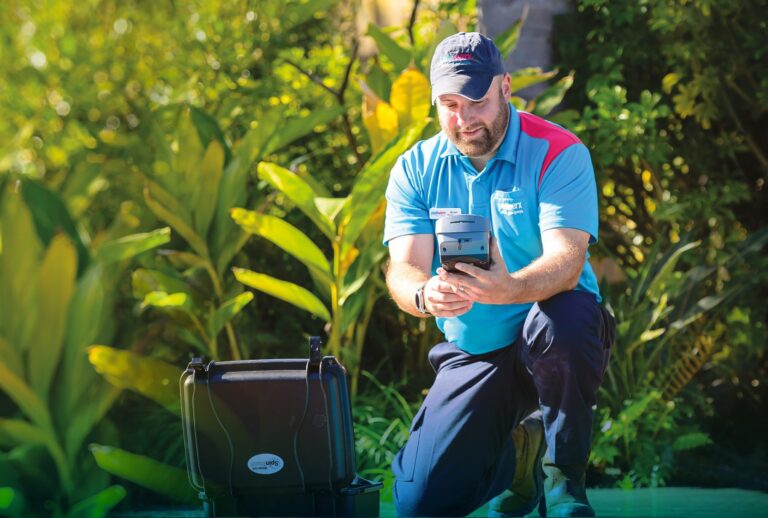
Digital Photometers: Devices that eliminate human error in color-matching. They provide digital readouts of all parameters with +/- 1% accuracy.
-
ORP (Oxidation-Reduction Potential) Probes: These measure the “work” chlorine is actually doing, rather than just the parts-per-million.
-
Automatic Acid Feeders: Systems that monitor pH and slowly drip Muriatic Acid to prevent the pH-rise common in salt-water pools.
-
Satellite-Linked Automation: Modern controllers that adjust filtration and chlorination based on local weather forecasts (e.g., increasing Cl before a rainstorm).
-
Reagent Grade 1 Titration: The “gold standard” for alkalinity and hardness testing.
-
Calcite Contactors: For pools with naturally soft water, these “re-mineralize” the water automatically to prevent corrosion.
The Risk Landscape: Failure Modes and Compounding Effects
Water chemistry is prone to “Cascading Failures.”
-
The “Phosphate-Algae” Feedback Loop: Phosphates enter the pool via lawn fertilizer or wind-blown debris. Algae feeds on phosphates. You kill the algae with chlorine, but the dead algae release more phosphates back into the water. If you don’t remove the phosphates, you are trapped in a cycle of constant shocking.
-
The “Corrosion-Conductivity” Risk: In salt-water pools, high salinity increases the electrical conductivity of the water. If the “Sacrificial Anode” is not maintained, the salt water will use the heater’s copper or the ladder’s stainless steel as the anode, leading to rapid galvanic corrosion.
-
Pathogenic “Shifting”: While most bacteria die instantly in 1 ppm chlorine, certain parasites like Giardia have high “Ct values” (Contact Time). If the chemical balance is off even slightly, these pathogens can remain viable for days.
Governance, Monitoring, and Long-Term Adaptation
A luxury or high-use aquatic facility requires a “Governance Protocol” that moves beyond the casual.
Layered Monitoring Checklist
-
Daily: Check Free Chlorine and pH. These are the “Active” variables.
-
Weekly: Check Total Alkalinity. This is the “Structural” variable.
-
Monthly: Check Calcium Hardness, CYA, and Salt levels. These are the “Baseline” variables.
-
Seasonally: Check Phosphates and Metals. These are the “Contaminant” variables.
Adjustment Triggers: If the LSI drops below $-0.5$ or rises above $+0.5$, the pool should be closed to bathers until the equilibrium is restored. This is a non-negotiable threshold for preserving the mechanical integrity of the heater and pump.
Measurement, Tracking, and Qualitative Evaluation
Effective management requires a blend of quantitative data and qualitative observation.
-
Leading Indicator: ORP levels. If ORP drops below 650mV, sanitization is failing, even if the Cl test shows 3 ppm.
-
Lagging Indicator: Calcium scaling on the salt cell. This indicates that the LSI has been positive for several weeks.
-
Qualitative Signal: “The Bubble Test.” If the surface bubbles from the returns last for more than a few seconds, it indicates high organic loading (surfactants) or a burgeoning algae colony.
-
Documentation: Maintain a “Chemistry Log.” Trends are more important than single points. If alkalinity is dropping by 10 ppm every week, you have an acid-leak or significant rainwater intrusion.
Common Misconceptions and Industry Myths
-
Myth: “Clear water is healthy water.”
-
Correction: Water can be perfectly clear but have a pH of 3.0 (battery acid) or be full of pathogenic parasites. Clarity is only a measure of filtration, not sanitization.
-
-
Myth: “Chlorine causes red eyes.”
-
Correction: Red eyes are usually caused by incorrect pH (too high or too low for the human eye’s 7.4) or high chloramines. Proper chlorine levels are actually soothing.
-
-
Myth: “Salt pools don’t use chlorine.”
-
Correction: Salt pools are chlorine pools. They simply manufacture it themselves. They require the same testing as any other pool.
-
-
Myth: “You can use baking soda for everything.”
-
Correction: Baking soda (Sodium Bicarbonate) raises alkalinity significantly but pH only slightly. Soda Ash (Sodium Carbonate) raises both. Using the wrong one leads to “pH Lock.”
-
-
Myth: “Shocking should only be done at night.”
-
Correction: While the sun does degrade unstabilized shock, if you have a massive algae bloom, the “demand” is so high that you should shock immediately, regardless of the time.
-
Ethical, Practical, and Contextual Considerations
The use of chemicals in a backyard or community environment carries an ethical responsibility. Improper disposal of backwash water (high in salt or chlorine) can damage local groundwater and soil biomes. Furthermore, the handling of Muriatic Acid—a powerful mineral acid—requires rigorous safety protocols, including specialized storage and vapor-protection equipment.
As we look at the context of 2026, “Water Scarcity” has become a driving factor in pool management. The old method of “draining and refilling” to fix a chemical imbalance is increasingly viewed as an unsustainable luxury. This has led to the rise of “Mobile RO (Reverse Osmosis)” trailers that can filter out CYA and Calcium Hardness without wasting the water—a practical and ethical evolution in high-end pool care.
Conclusion: The Synthesis of Science and Stewardship
Mastering how to manage pool chemical imbalance is a continuous exercise in patience and intellectual honesty. It requires the manager to respect the physics of water and the biology of the bather. A truly balanced pool is a silent triumph; it is an environment where the infrastructure is protected, the water is inviting, and the chemistry is so well-governed that it becomes invisible.
The goal of professional aquatic management is not to achieve a “perfect” set of numbers, but to maintain a “Stable State.” By focusing on the LSI, respecting the sanitization rates, and using modern digital tools to track long-term trends, the pool owner transitions from a reactive firefighter to a proactive curator. In the final analysis, the health of a pool is a reflection of the discipline of its steward—a synthesis of scientific rigor and daily attention that ensures the longevity of the asset and the safety of those within it.