How to Avoid Pool Contractor Scams: The Definitive Vetting Guide
The installation of a residential swimming pool represents one of the most significant capital outlays a homeowner can undertake, often rivaling the cost of the primary structure’s mortgage or a high-end luxury vehicle. Because the process involves complex engineering, subterranean variables, and a fragmented regulatory landscape, it creates a unique vacuum where information asymmetry thrives. In this environment, the gap between what a homeowner understands and what a contractor executes can become a breeding ground for financial exploitation and structural malpractice.
Identifying the nuances of “best-in-class” construction versus corner-cutting is difficult because the most critical components of a pool—rebar density, shotcrete velocity, and hydraulic plumbing—are buried shortly after installation. Once the deck is poured and the plaster is set, the evidence of an inferior build is physically obscured, leaving the owner with a ticking clock of systemic failure. This reality makes the vetting process not just a matter of consumer caution, but an essential phase of project engineering.
Vulnerability in the pool industry often stems from the emotional nature of the purchase. The “backyard oasis” is a high-reward vision that unscrupulous actors exploit by offering accelerated timelines or prices that defy the current market reality for raw materials like steel and cement. To navigate this market safely, one must adopt an analytical, forensic mindset that treats the contractor-client relationship as a formal risk-management exercise.
Understanding “how to avoid pool contractor scams”
To master how to avoid pool contractor scams, one must first accept that “scams” are not always binary disappearances with a deposit. While the “vanishing contractor” is the most publicized threat, the more pervasive and damaging scams involve technical insolvency and structural negligence. In these cases, a contractor may finish the pool, but by utilizing unlicensed sub-contractors or bypassing soil compaction standards, they deliver an asset that will fail within five years.
A sophisticated understanding of this risk landscape requires looking through three distinct lenses:
-
The Financial Lens: Is the contractor using your deposit to finish the previous client’s pool? This “Ponzi-style” construction model is common among builders who lack sufficient operating capital.
-
The Regulatory Lens: Does the builder attempt to convince the homeowner to pull the permits as an “Owner-Builder”? This is a major red flag designed to shift all legal and safety liability from the professional to the consumer.
-
The Technical Lens: Does the quote omit critical specifications like “Total Dynamic Head” calculations or concrete PSI ratings? Omitting technical details allows the contractor to swap high-end equipment for inferior alternatives later in the project.
Oversimplification in this sector is dangerous. A common mistake is relying solely on online reviews, which can be easily manufactured or purchased. A deep-dive vetting process involves verifying the contractor’s “General Liability” and “Workers’ Compensation” insurance directly with the carrier, rather than accepting a photocopied certificate which may have expired.
Historical Context: The Systemic Evolution of Pool Fraud
The swimming pool industry has historically been a localized, low-barrier-to-entry trade. In the mid-20th century, pool building was often a seasonal extension of masonry or septic work. As pools became more technologically advanced—incorporating automation, salt-chlorine generators, and complex vanishing edges—the required expertise outpaced the average contractor’s education. This created a professional “knowledge gap.”
The 2008 financial crisis and the 2020-2022 “pandemic pool boom” served as two bookends for industry volatility. During the 2008 crash, many reputable companies went insolvent, leaving half-finished “dirt holes” across the country. Conversely, during the 2020 boom, a massive influx of inexperienced “handymen” rebranded themselves as pool contractors to capitalize on high demand. This surge in volume led to a proliferation of “labor-only” scams, where builders take deposits, dig a hole, and then claim they cannot find sub-contractors or materials, effectively holding the homeowner’s backyard hostage for more money.
Conceptual Frameworks for Risk Mitigation
To evaluate a potential builder, use these mental models to filter out high-risk actors:
-
The Cash Flow Linearity Model: In a healthy construction project, money should follow progress. If a contractor asks for more than 10–15% upfront (depending on state laws) or demands a “milestone payment” before that milestone is fully inspected by the city, they are likely using your cash to solve a liquidity crisis elsewhere.
-
The “Lien Waiver” Framework: This model assumes that every sub-contractor (the steel crew, the shotcrete crew, the tile crew) is a potential legal threat to your property. A professional project requires a “Conditional Lien Release” from every vendor before they are paid, ensuring they cannot put a lien on your house if the primary contractor fails to pay them.
-
The “Invisible Construction” Theory: This focuses on the 70% of the pool that is hidden. If a contractor cannot explain the thickness of the “Gunite” or the schedule of the PVC plumbing, they are selling a cosmetic product rather than an engineered structure.
Key Categories of Contractor Malpractice
Understanding the specific variations of exploitation allows for better contractual protection.
Decision Logic for Vetting
If a contractor provides a quote that is 20% lower than three other reputable builders, the logic suggests that the difference is coming out of the “hidden” infrastructure (less steel, thinner concrete) or they are not paying for proper insurance. In the pool industry, the most expensive pool is the one you have to build twice.
Detailed Real-World Scenarios How to Avoid Pool Contractor Scams

Scenario 1: The “Unfinished Hole”
A homeowner pays a 30% deposit and a 30% “dig payment.” The contractor excavates the hole, sets the steel, and then disappears.
-
The Failure: The homeowner is left with a dangerous trench that is eroding their foundation.
-
The Prevention: Payments should be smaller and more frequent. Never pay for the “next stage” until the current stage has passed a municipal inspection.
Scenario 2: The Uninsured Injury
A sub-contractor falls into the pool shell and breaks their back. The primary contractor’s insurance expired two months ago.
-
The Result: Under many state laws, the homeowner becomes the “de facto” employer and is liable for medical costs.
-
The Prevention: Demand a “Certificate of Insurance” (COI) that names the homeowner as “Additionally Insured” for the duration of the project.
Planning, Cost, and Resource Dynamics
The “true” cost of a pool includes the “Risk Premium.” A cheaper contractor often carries a hidden cost in the form of potential legal fees or structural repairs.
Opportunity Cost: Choosing a builder based on an “immediate start date.” Reputable, high-quality builders are usually booked 4–8 months in advance. A builder who can “start tomorrow” is often a builder who has no other clients—a major red flag for quality and stability.
Tools, Strategies, and Verification Systems
Homeowners should utilize these specific tools to verify contractor legitimacy:
-
The Secretary of State Website: Verify the business is an “Active” LLC or Corporation in good standing.
-
The Bond Verification: Most states require a “Contractor Bond.” Get the bond number and call the surety company to ensure it hasn’t been tapped out by previous claims.
-
The Reference Audit: Ask for the addresses of three pools built three years ago. New pools always look good; a three-year-old pool reveals if the contractor’s plumbing and soil prep were sufficient.
-
The “Material-Only” Payment: For high-ticket items like the equipment or the tile, offer to pay the supplier directly. This ensures the money isn’t diverted to the contractor’s personal expenses.
Risk Landscape and Compounding Failures
In pool construction, failures are rarely isolated; they compound.
-
Hydraulic Failure: A contractor uses 1.5-inch pipe instead of 2.5-inch to save $400. This forces the pump to work harder, doubling the energy bill and burning out the motor in two years.
-
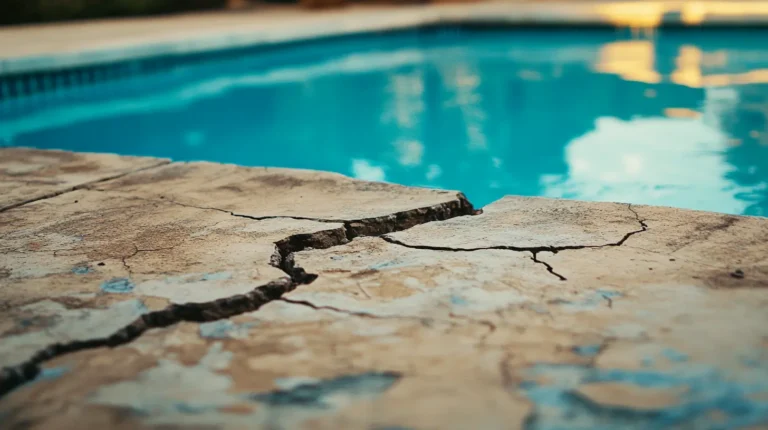
Waterproofing Failure: Skimping on the “Waterstop” around the lights and returns. This leads to slow leaks that saturate the soil, causing the pool deck to “heave” and crack.
-
The “Lien” Cascade: The builder takes your final payment but doesn’t pay the plaster company. The plaster company places a lien on your home, preventing you from selling or refinancing until you pay them—effectively paying for the plaster twice.
Governance, Maintenance, and Long-Term Adaptation
Once the project begins, the homeowner must act as the “Project Governor.”
-
The Daily Log: Take photos of the steel grid before the concrete is poured. Record the date of every inspection.
-
The Payment Checklist: Never hand over a check without a signed “Release of Lien” for the previous milestone’s labor and materials.
-
The Milestone Audit: If the contract says “Schedule 40 PVC,” and the pipe in the ground is thin-walled, stop the project. It is easier to fix a pipe before the concrete is poured than after.
Measurement, Tracking, and Evaluation
-
Leading Indicators: Contractor responsiveness, presence of “Porta-Potties” on-site (indicates professional site management), and the use of labeled company vehicles.
-
Lagging Indicators: Passing inspections on the first attempt and the maintenance of a clean job site.
-
Documentation Example: A “Payment Schedule” based on verifiable progress (e.g., “Steel, Plumbing, and Ground Bond Inspection Passed”) rather than dates (e.g., “August 1st”).
Common Misconceptions and Strategic Errors
-
“A licensed contractor is a safe contractor.” Licenses are a minimum bar. A contractor can have a license and still be technically insolvent or a “paper builder” who never visits the job site.
-
“The contract protects me.” A contract is only as good as your willingness to sue. Most scammers know that a $15,000 lawsuit is too expensive for most homeowners to pursue.
-
“Handshake deals are fine for small changes.” Change orders are where the most “mini-scams” happen. Every change, no matter how small, must be documented in writing with a specific price and timeline impact.
Conclusion
The complexity of aquatic engineering requires a partnership built on transparency and technical competence. Knowing how to avoid pool contractor scams is not just about avoiding “bad people”; it is about enforcing professional standards through rigorous vetting and contractual governance. By treating the construction of a pool as a multi-stage engineering project rather than a simple retail purchase, the property owner shifts the power dynamic back in their favor. A reputable builder will welcome a sophisticated client who understands lien waivers and PSI ratings, as it distinguishes them from the “trunk-slammers” who undermine the industry’s integrity. Ultimately, the best defense is a refusal to accept “standard” as a specification and a commitment to verifying every layer of the build before it is buried forever.